
Research Article
Prevalence and Determinants of Risky Sexual Behaviour Among Secondary School Adolescents in Kaiama Community, Bayelsa State
1Department of Family Medicine, Niger Delta University, Wilberforce Island Bayelsa State, Nigeria.
2Department of Clinical Pharmacy, Niger Delta University, Wilberforce Island Bayelsa State, Nigeria.
3Department of Family Medicine, National Hospital Abuja, Abuja, Nigeria.
*Corresponding Author: Peter A. Owonaro, Department of Clinical Pharmacy, Niger Delta University, Wilberforce Island Bayelsa State, Nigeria.
Citation: Owonaro DA, Owonaro PA, Ogunfowokan G, Moses A. (2026). Prevalence and Determinants of Risky Sexual Behaviour Among Secondary School Adolescents in Kaiama Community, Bayelsa State, International Journal of Biomedical and Clinical Research, BioRes Scientia Publishers. 6(6):1-12. DOI: 10.59657/2997-6103.brs.26.126
Copyright: © 2026 Peter A. Owonaro, this is an open-access article distributed under the terms of the Creative Commons Attribution License, which permits unrestricted use, distribution, and reproduction in any medium, provided the original author and source are credited.
Received: February 18, 2026 | Accepted: March 31, 2026 | Published: April 06, 2026
Abstract
Risky sexual behaviour among adolescents constitutes a major public health challenge due to its adverse effects on their reproductive and physical health. In a bid to understand this among secondary school adolescents in Bayelsa State, a descriptive cross-sectional study using a multi-stage sampling technique was conducted from January 2020 to March 2020, involving 293 secondary school adolescents. Data for socio-demographic characteristics and sexual behaviour were collected using a pre-tested self-administered questionnaire. Data was analyzed using IBM SPSS version 23.0. Descriptive statistics were summarized, and a chi-square test was used to examine the relationship between the participants' socio-demographic characteristics and sexual behaviour. The mean age of the participants was 15.17 ± 1.61 years. Sexual activity (59.4%) and risky sexual behaviour (51.2%; CI = 45.3 - 57.1%) were high among the participants. Among the sexually active participants, early sexual debut was 80.2%, multiple sexual partnership was 47.1%, non-use of condoms at last sexual intercourse was 52.3%, while having sex under the influence of alcohol and transactional sex were 52.9% and 30.5%, respectively. Thus, highlighting a high level of risky sexual behavior amongst the study participants.
Keywords: risky sexual behaviours; adolescents; sexual debut; secondary school students
Introduction
Adolescent sexual behavior has remained an issue of public health concern due to the numerous risks associated with it in adolescence and later years [1-3]. Many of the social disorders and diseases of public health significance (such as teenage pregnancy, drug and alcohol misuse, and sexually transmitted infections) have their roots in human sexuality and its adverse outcomes [4]. The sexual and reproductive health needs of young people are a global burden requiring a renewed and ongoing focus, because of their lasting effects on the individual, family, society, and nations [2,5].
Adolescent sexual behaviour is a concept influenced by developmental processes across several domains and a transitional trend that is characterized by abstinence, preparation for sexual involvement, and sexual initiation [6,7]. Several factors have been shown to predict the sexual behaviour of adolescents, such as individual characteristics, family characteristics, and the influence of peers.8 Although this behaviour is normal and allows for a healthy exploration of sexuality, for most adolescents, it rather creates risks because of their cognitive immaturity, which predisposes them to poor sexual decision making and its adverse effects, such as sexually transmitted infections (STIs) including HIV, pelvic inflammatory disease, and several cancers [6,7,9].
Globally, the prevalence of adolescent risky sexual behaviour is increasing, especially in developing countries [10]. In Africa, a meta-analysis done on risky sexual behaviour among young people noted a prevalence ranging from 10.8% to 78.8% with an overall pooled prevalence of 42.8%. In Nigeria, a study done in the South-Eastern part of the country showed a prevalence of 24.1%, with early sexual debut, transactional sex, and intergenerational sex being the most prevalent risky sexual behaviours. In Bayelsa state, it was noted that early coitarche, transactional sex, and multiple sexual partnerships were highly prevalent amongst female undergraduate youths [11,12].
This study utilizes the social cognitive theory in providing a means of understanding, predicting, and changing human behaviour. According to this theory, the sexual behaviour of adolescents is an interplay of their personal competencies, efficacy to manage themselves, and the level of peer influence they encounter. This, in turn determines their ability to overcome or become involved in the practice of risky sexual activities. Personal (socio-demographic characteristics), behavioural (social interactions), and environmental (physical surroundings) factors are pivotal in the lives of adolescents, especially with regard to their sexual and reproductive health. This is due to the role they play in determining adolescents’ initiation and engagement in risky sexual behaviours [14,46]. Using the above triadic model in this study, the interaction between personal, environmental, and behavioural factors in shaping adolescent sexual behaviours will be the focus.

Figure 1: Predictors of Adolescent sexual behaviour.
The purpose of this study is, therefore, to determine the Prevalence and determinants of risky sexual behaviour among secondary school adolescents in Kaiama community in Bayelsa State.
Materials and Methods
Study Area
The study was carried out among secondary school adolescents in the Kaiama community of Bayelsa State. Kaiama is the area council headquarters of the Kolokuma-Opokuma local government area with a population of 77,292 [46]. The community has a peri-urban setting with a population of 8,764 as at the 1991 population census of Nigeria. The community had two Government secondary schools with a population of 550 and 472 students respectively, and three private secondary schools with a population of 450, 387, and 508 students respectively as of April 2019.
Study Population
Male and female adolescents in secondary schools residing in the Kaiama community, between the ages of 10 and 19 years. The study was conducted between January and March 2020.
Study Design
Analytical cross-sectional study.
Sample Size Determination
The sample size was calculated using the Cochran equation13 and a prevalence of 24.1% for adolescent risky sexual behaviour.14 Accordingly, the calculated sample size was 262. Adjusting for 10% attrition (for non-response and missing data): N = 262 + 26.2 = 289 participants.
Sampling Technique
Multi-stage sampling technique.
The students were initially grouped according to their schools to ensure adequate coverage and generalizability of the results to the entire adolescent student population in the community. The total number of participants to be drawn from each school and each class was then proportionately allocated as calculated below;
The student population from the schools was as follows: School 1, 550 students; School 2, 472 students, school 3; 450 students; School 4, 387 students; and School 5, 508 students, giving a total of 2,367 students.
Hence sample size for school 1 was = 550/2367 X 289 = 67 participants.
For school 2, 472/2367 x 289= 58 participants.
For school 3, 450/2367 x 289= 55 participants.
For school 4, 387/2367 x 289= 47 participants
For school 5, 508/2367 x 289= 62 participants.
Study Instrument
Collection of data for the study was done using a pre-tested self-administered questionnaire adapted from the youth risk behaviour surveillance survey (YRBSS). The questionnaire consisted of three parts; the socio-demographic characteristics, social behaviour and sexual behaviour of the study participants.
Data Analysis
Responses derived from all questionnaires were coded into quantitative data to enable parametric analysis. Data were entered into a Microsoft Excel spreadsheet and then transported into the Statistical Package for the Social Sciences (SPSS) version 23.
Descriptive statistics in the form of charts, frequency tables, and percentages were used in describing the characteristics of the participants (categorical variables) and their sexual behaviour, as well as in determining the prevalence of risky sexual behavior among the participants.
Chi-square test was used to determine the socio-demographic factors and social behaviours associated with risky sexual behaviour in the study participants.
Ethical Issues
Ethical approval was gotten from the Health Research Ethics Committee of the National Hospital, Abuja, and the Bayelsa State Ministry of Health.
A letter of permission to conduct the study was also gotten from the Bayelsa State Post-Primary Schools Board. Informed consent was obtained from each participant’s parent/guardian, and their welfare, rights, and confidentiality were guaranteed throughout the research. The study was carried out in line with the Good Clinical Practice Principles and in conformity with the Declaration of Helsinki.
Results
Socio-demographic Characteristics of Study Participants
Of the 293 participants, 150 (51.2%) were females, while 143 (48.8%) were males. The mean age of the participants was 15.17 ± 1.61, with a median and modal age of 16 years. The age range of the participants was 11-18 years, with most of them 178 (60.8%) being in their mid-adolescent years (14-16 years). The majority of the respondents, 216 (73.7%), were Ijaws, while the remaining 77 (26.3%) were from other tribes such as Igbo, Yoruba, Hausa, Isoko, Urhobo, and Itsekiri. Christianity was the dominant religion reported by the participants. Over half of the participants, 172 (58.7%), reported that they resided with their parents. Also, S.S.1 had the highest number of respondents (N=71, 24.2%), while J.S.S.1 had the least (N = 25, 8.5%) with regard to their educational class as shown in Table 1.
Table 1: Socio-demographic characteristics of study participants.
| Variable | Frequency (n =293) | Percent (%) |
| Age (years) | ||
| 11 - 13 | 44 | 15.0 |
| 14 - 16 | 178 | 60.8 |
| 17 - 19 | 71 | 24.2 |
| Religion | ||
| Christianity | 265 | 90.4 |
| Islam | 21 | 7.2 |
| None | 5 | 1.7 |
| Others | 2 | 0.7 |
| Living Standard | ||
| Living with both parents | 172 | 58.7 |
| Living with a single parent | 39 | 13.3 |
| Living with step parent | 44 | 15.0 |
| Living with grandparents | 17 | 5.8 |
| Living with relatives | 21 | 7.2 |
| Participants’ Educational Level | ||
| J.S.S 1 | 25 | 8.5 |
| J.S.S 2 | 49 | 16.7 |
| J.S.S 3 | 56 | 19.1 |
| S.S 1 | 71 | 24.2 |
| S.S 2 | 53 | 18.2 |
| S.S 3 | 39 | 13.3 |
(n = number of participants in the study population; N = number of observation)
More than half (N = 176, 60.1%) of the participants' parents were married. On the educational qualification of the participants’ parents, the most frequent educational qualification reported by the respondents was secondary level of education for both parents (fathers’ N = 123, 42.0%, and mothers’ N = 139, 67.6%). On the occupation of their parents, most of the participants had mothers who were civil servants (N = 127, 43.3%) while the majority of their fathers (N = 131, 44.8%) were traders, as shown in Table 2.
Table 2: Marital status, occupation, and educational level of participants' parents.
| Variable | Frequency (N) | Percent | ||
| Marital Status of Participants’ Parents | ||||
| Divorced | 20 | 6.8 | ||
| Separated | 53 | 18.1 | ||
| Married | 176 | 60.1 | ||
| Cohabiting | 44 | 15.0 | ||
| Educational Qualification | Frequency N (%) | Frequency N (%) | ||
| n=293 | n=293 | |||
| Mother | Father | |||
| None | 16 | (5.5) | 27 | (9.2) |
| Primary | 48 | (16.4) | 77 | (26.3) |
| Secondary | 134 (45.7) | 123 (42.0) | ||
| Tertiary | 95 | (32.4) | 66 | (22.5) |
| Occupation | ||||
| Farmer | 58 | (19.8) | 70 | (23.9) |
| Trader | 63 | (21.5) | 131 (44.7) | |
| Fishing | 23 | (7.9) | 18 | (6.2) |
| Civil Servant | 127 (43.3) | 61 | (20.8) | |
| Artisan | 22 | (7.5) | 13 | (4.4) |
Social Behaviour of Study Participants
With regards to their social behaviour, almost half of the participants reported that their friends were sexually active (N = 126, 43.0%) and that they were under pressure from friends to indulge in sex (N=141, 48.1%). Of those who reported use of recreational drugs, 18.4% used it regularly, 58.7% used it sometimes, while 22.9% rarely used it. Among the smokers, 40.6% used cigarettes, while 59.4% used marijuana. About one third of the respondents reported that they drank alcohol (33.8%), of which 40.4% of them were regular drinkers, 26.3% drank only when with friends, 17.2% drank only at parties, 14.1% drank only to enable them get high, and 2.1% rarely drank alcohol, as shown in Table 3.
Table 3: Participants reported social behaviour.
| Social Behavior (n=293) | Yes (%) | No (%) | ||
| N=775 | N=1276 | |||
| Have sexually active friends | 126 | (43) | 167 | (57) |
| Peer pressure to engage in sex | 141 | (48.1) | 152 | (51.9) |
| Parents give me stipends regularly | 116 | (39.6) | 177 | (60.4) |
| Ever use of recreational drugs | 109 | (37.2) | 184 | (62.8) |
| Do you smoke | 69 (23.6) | 224 | (76.4) | |
| Do you drink alcohol | 99 (33.8) | 194 | (66.2) | |
| What pornography | 115 | (39.25) | 178 | (60.75) |
Almost half of the participants (N=147) reported having a high religious inclination. However, only 32.5% of the respondents reported that they attended religious activities frequently. Also, more than half of the participants reported that their interest in school activities was average, while 70.3% of the respondents (N=206) described their physical surroundings as peaceful, as shown in Table 4.
Table 4: Participants reported social behaviour continued.
| Social Behavior | Frequency (N=293) | Percentage (%) |
| Religious Inclination | ||
| High | 147 | 50.2 |
| Low | 146 | 49.8 |
| Interest in School Activities | ||
| High | 67 | 22.9 |
| Low | 47 | 16.0 |
| Average | 179 | 61.1 |
| Where do you spend your spare time? | ||
| Library | 18 | 6.1 |
| Home | 155 | 52.9 |
| Supporting Family | 30 | 10.2 |
| Church | 9 | 3.1 |
| Relaxation joints | 81 | 27.7 |
| Description of Living Environment | ||
| Peaceful | 206 | 70.3 |
| Violent | 87 | 29.7 |
Participants Reported Sexual Behaviour
In tables 5 and 6 are the items used in assessing the sexual behaviour of the participants. The items in table 5 were used in computing the domain rating for the sexual behaviour of the participants as shown in figure 1 on page 2. More than half of the participants (59.4%) were sexually experienced. Majority of which (80.2%) experienced early sexual debut. The mean age at sexual debut among the participants was 14.14 ± 1.99 as shown in Table 5.
Table 5: Participants reported sexual behaviour.
| Sexual Behavior | Frequency | Percentage (%) |
| Ever had sex (n=293) | ||
| Yes | 174 | 59.4 |
| No | 119 | 40.6 |
| Age at sexual debut: (n=174) | ||
| ≤ 15 years | 116 | 80.2 |
| ˃ 15 years | 58 | 19.8 |
| Sexual partners in the last 12 months (n=174) | ||
| ≤ 1 | 92 | 52.9 |
| ≥ 2 | 82 | 47.1 |
| Use of condom during last sexual encounter (n=174) | ||
| Yes | 83 | 47.7 |
| No | 91 | 52.3 |
| Exchange of gift for sex (n=174) | ||
| Yes | 53 | 30.5 |
| No | 121 | 69.5 |
| Had sex under influence of drugs or alcohol (n=174) | ||
| Yes | 92 | 52.9 |
| No | 82 | 47.1 |
Mean age at sexual debut 14.14 ± 1.99, *Age range at sexual debut: 10 – 17 years
More than one-third of the sexually experienced participants (35.6%) believed that it was good for adolescents to engage in sexual activity. One-third of them (33.3%) also reportedly engaged in anal sex, while 26.4% of them were bisexual, as shown in Table 6.
Table 6: Participants reported sexual behaviour continued.
| Variable | Frequency (N=174) | Percentage (%) |
| Perception about adolescents having sex | ||
| Good | 62 | 35.6 |
| Wrong | 67 | 38.5 |
| Not sure | 45 | 25.9 |
| Preferred Mode of Sexual Intercourse | ||
| Vaginal | 87 | 50.0 |
| Anal | 58 | 33.3 |
| Oral | 2 | 1.2 |
| Vaginal & Anal | 21 | 12.1 |
| All three modes (vaginal, anal & oral) | 6 | 3.5 |
| Sexual Orientation | ||
| Heterosexual | 115 | 66.1 |
| Gay | 2 | 1.2 |
| Lesbianism | 11 | 6.3 |
| Bisexual | 46 | 26.4 |
Prevalence of Risky Sexual Behaviour in the Study
Among the participants, a high prevalence of sexual behaviour that put them at risk of sexual and reproductive health issues was noted. The prevalence of risky sexual behaviour among the study participants was 51.2% (95% confidence limit 45.3-57.1).
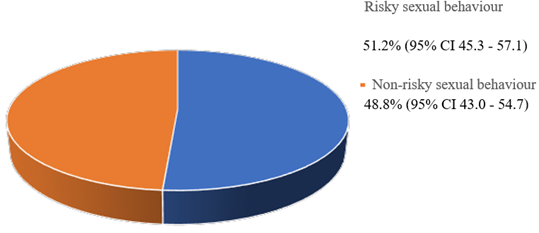
Figure 2: Pie chart showing participants reported sexual behaviour.
Socio-Demographic Characteristics and Participants' Sexual Behaviour
Socio-demographic characteristics were noted to predict the sexual behaviour of the participants in this study, as depicted in Tables 7 and 8. A significant association was found between gender and sexual behaviour (p=0.002) as well as class and sexual behaviour (p=0.001), as shown in Table 7.
Table 7: Participants' Socio-demographic Characteristics and their Sexual Behaviour.
| Sociodemographic Characteristic | Non-risky Sexual Behaviour n=143 | Risky Sexual Behaviour n=150 | Total n = 293 | Chi-square | p-value |
| Age | |||||
| Early adolescent | 16 (36.4) | 28 (63.6) | 44 | 3.2113 | 0.2010 |
| Mid adolescent | 91 (51.1) | 87 (48.9) | 178 | ||
| Late adolescent | 36 (50.7) | 35 (49.3) | 71 | ||
| Gender | |||||
| Male | 83 (58.0) | 60 (42.0) | 143 | 9.5375 | 0.0020* |
| Female | 60 (40.0) | 90 (60.0) | 150 | ||
| Tribe | |||||
| Ijaw | 108 (50.0) | 108 (50.0) | 216 | 0.6234 | 0.4300 |
| Othersa | 34 (44.7) | 42 (55.3) | 76 | ||
| Religion | |||||
| Christianity | 128 (48.3) | 137 (51.7) | 265 | 0.2814 | 0.5980 |
| Othersb | 15 (53.6) | 13 (46.4) | 28 | ||
| Living Arrangement | |||||
| Both parents | 87 (50.6) | 85 (49.4) | 172 | 2.3145 | 0.3143 |
| Single/Step parent | 35 (42.2) | 48 (57.8) | 83 | ||
| Relatives/Grandparents | 21 (55.3) | 17 (44.7) | 38 | ||
| Participants Level of Education | |||||
| Junior secondary | 47 (36.2) | 83 (63.8) | 130 | 14.97 | 0.0001* |
| Senior secondary | 96 (58.9) | 67 (41.1) | 163 | ||
A = Igbo, Yoruba, Hausa, Isoko, Urobho, Itsekiri. b = Islam, none, others
A significant association was found between the marital status of the participants' parents and the sexual behaviour of the participants (p=0.0014). Also, the educational qualification of the participants' fathers had a significant association with their sexual behaviour (p = 0.0139).
Table 8: Socio-demographic characteristics of participants and their sexual behaviour continued.
| Sociodemographic Characteristic | Non-Risky Sexual Behaviour n=143 | Risky Sexual Behaviour n=150 | Total N= 293 | Chi-square | p-value |
| Parents Marital Status | |||||
| Married | 101 (57.4) | 75 (42.6) | 176 | 13.2005 | 0.0014* |
| Cohabiting | 17 (38.6) | 27 (61.4) | 44 | ||
| Divorced/separated | 25 (33.0) | 48 (66.0) | 73 | ||
| Mother’s Educational Level | |||||
| Tertiary | 52 (54.7) | 43 (45.3) | 95 | 1.9795 | 0.1594 |
| Othersa | 91 (46.0) | 107 (54.0) | 198 | ||
| Father’s Educational Level | |||||
| Tertiary | 41 (62.1) | 25 (37.9) | 66 | 6.0454 | 0.0139* |
| Othersa | 102 (44.9) | 125(55.1) | 227 | ||
Others: None, primary, secondary.
On assessing the social behaviour of the participants, with regards to their sexual behaviour, a significant association was noted between participants sexual behaviour and the following characteristics; having friends that engage in sex (p=0.004), experience of peer pressure (p=0.0217), receipt of regular stipends from parents (p=0.04), use of recreational drugs (p=0.000), smoking (p=0.00) and alcohol ingestion (p=0.000) as shown in Table 9.
Table 9: Participants reported sexual behaviour and their social interactions.
| Social Behaviour | Non-risky Sexual Behaviour n=143 | Risky Sexual Behaviour n=150 | Total N = 293 | Chi-square | p-value |
| Friends engage in sex | |||||
| Yes | 53 (42.1) | 73 (57.9) | 126 | 4.022 | 0.044* |
| No | 90 (53.9) | 77 (46.1) | 167 | ||
| Peer pressure | |||||
| Yes | 59 (41.8) | 82 (58.2) | 141 | 5.272 | 0.0217* |
| No | 84 (55.3) | 68 (44.7) | 152 | ||
| Regular stipends from parents | |||||
| Yes | 48 (41.4) | 68 (58.6) | 116 | 4.238 | 0.04* |
| No | 95 (53.7) | 82 (46.3) | 177 | ||
| Use of recreational drugs | |||||
| Yes | 30 (27.5) | 79 (72.5) | 109 | 31.465 | 0.0000* |
| No | 113 (61.4) | 71 (38.6) | 184 | ||
| Smoking | |||||
| Yes | 18 (26.1) | 51 (73.9) | 69 | 18.644 | 0.0000* |
| No | 125 (55.8) | 99 (44.2) | 224 | ||
| Drink alcohol | |||||
| Yes | 29 (29.3) | 70 (70.7) | 99 | 22.784 | 0.0000* |
| No | 114 (58.8) | 80 (41.2) | 194 | ||
| Frequency of alcohol use | |||||
| Regularly | 13(32.5) | 27(67.5) | 40 | 0.333 | 0.564 |
| Occasionally | 16(27.1) | 43(72.9) | 59 | ||
A significant association was also found between the sexual behaviour of the participants and their religious inclination (p = 0.00), frequency with religious activities (p = 0.00), interest in school activities (p = 0.00), where they spend their spare time (p = 0.002), if they watched pornography (p = 0.00) and the nature of their physical environment (p = 0.00). This is as shown in Table 10.
Table 10: Participants reported sexual behaviour and their social interactions continued.
| Social Behaviour | Non-risky Sexual Behaviour n=143 | Risky Sexual Behaviour n=150 | Total N = 293 | Chi-square | p-value |
| Religious Inclination | |||||
| High | 98 (66.7) | 49 (33.3) | 147 | 37.6670 | 0.0000* |
| Low | 45 (30.8) | 101 (69.2) | 146 | ||
| Frequency of Religious Activities | |||||
| Regularly | 70 (73.7) | 25 (26.3) | 95 | 38.464 | 0.0000* |
| Occasionally | 63 (40.4) | 93 (59.6) | 156 | ||
| Rarely | 10 (23.8) | 32 (76.2) | 42 | ||
| Interest in School Activities | |||||
| High | 55 (82.1) | 12 (17.9) | 67 | 46.549 | 0.0000* |
| Average | 77 (43.0) | 102(56.0) | 179 | ||
| Low | 11 (25.0) | 33 (75.0) | 44 | ||
| None | 0 (0.0) | 3 (100.0) | 3 | ||
| Watch Pornography | |||||
| Yes | 27 (23.5) | 88 (76.5) | 115 | 48.5990 | 0.0000* |
| No | 116 (65.2) | 62 (34.8) | 178 | ||
| Nature of The Physical Environment | |||||
| Peaceful | 121 (58.7) | 85 (41.3) | 206 | 27.3925 | 0.0000* |
| Violent | 22 (25.3) | 65 (74.7) | 87 | ||
Discussion
The findings showed that the participants were almost evenly distributed, with 51.2
Declarations
Acknowledgment
There was no conflict of interest among the authors. The researchers appreciated the statistician, participants, research assistance and researchers for the time.
Conflict of Interest
The Researchers declare that there was no conflict of interest.
References
- Okigbo, C. C., Kabiru, C. W., Mumah, J. N., Mojola, S. A., Beguy, D. (2015). Influence of parental factors on adolescents’ transition to first sexual intercourse in Nairobi, Kenya: a longitudinal study. Reproductive Health, 12(1):73.
Publisher | Google Scholor - Etzkin, R., Barnett, R. V., Smith, S., Schwartz, S. E., Baugh, E. J. (2010). Parenting style and the timing of Jewish adolescents’ sexual debut. Journal of Youth Development, 5(2).
Publisher | Google Scholor - Dittus, P. J., Michael, S. L., Becasen, J. S., Gloppen, K. M., McCarthy, K., et al. (2015). Parental monitoring and its associations with adolescent sexual risk behavior: A meta-analysis. Pediatrics, 136(6):e1587-e1599.
Publisher | Google Scholor - Akintola, A. A. (2017). Perceived parental behaviour as predictor of in-school adolecent sexual risk behaviour in Ibadan, Nigeria. 22(8):1-8.
Publisher | Google Scholor - United Nations Children’s Fund. (2015). Adolescents and Young People, UNICEF.
Publisher | Google Scholor - Pringle, J., Mills, K. L., McAteer, J., Jepson, R., Hogg, E., et al. (2017). The physiology of adolescent sexual behaviour: A systematic review. Cogent Social Sciences, 3(1):1368858.
Publisher | Google Scholor - Tulloch, T., Kaufman, M. (2013). Adolescent sexuality. Pediatrics in Review, 34(1):29-38.
Publisher | Google Scholor - Wamoyi, J., Wight, D., Remes, P. (2015). The structural influence of family and parenting on young people's sexual and reproductive health in rural northern Tanzania. Culture, Health & Sexuality, 17(6):718-732.
Publisher | Google Scholor - Furlanetto, M. F., Ghedin, D. M., Gonçalves, T. R., Marin, A. H. (2019). Individual and contextual factors associated with sexual initiation among adolescents. Psicologia: Reflexão e Crítica, 32(1):25.
Publisher | Google Scholor - Ugoji, F. N. (2014). Determinants of risky sexual behaviours among secondary school students in Delta State Nigeria. International Journal of Adolescence and Youth, 19(3):408-418.
Publisher | Google Scholor - Ayinmoro AD, Uzobo E, Teibowei BJ, Fred JB. (2020). Sexting and Other Risky Sexual Behaviour Among Female Students in a Nigerian Academic Institution. J Taibah Univ Med Sci. 15(2):116-121.
Publisher | Google Scholor - United Nations Joint Programme on HIV/AIDS. (2019). HIV and AIDs in Nigeria. Glob Inf HIV AIDS. 1-16.
Publisher | Google Scholor - Adegun PT, Amu EO. (2017). Prevalence and Healthcare-seeking Behaviour for Sexually Transmitted Infections among In-school Adolescents in Ado-Ekiti, South-Western Nigeria. Int J Adolesc Med Health. 29(6):1-7.
Publisher | Google Scholor - Azuike EC, Chisom II, Achunam NS, Emelumadu OF, Seyifumi BJ, et al. (2015). Sexual Behaviour Among Senior Secondary School Students in Nnewi North and Nnewi South Local Government Areas of Anambra State, South-Eastern Nigeria. Eur J Prev Med. 3(2):26-33.
Publisher | Google Scholor - Oluyemi JA, Yinusa MA, Abdullateef R, Kehinde K, Adejoke J. (2017). Parental Influence on Adolescent Sexual Behaviour Among Secondary School Students in Ogbomoso, Nigeria. AJSW. 7(1):37-43.
Publisher | Google Scholor - Durowade KA, Babatunde OA, Omokanye LO, Elegbede OE, Ayodele LM, et al., (2017). Early Sexual Debut: Prevalence and Risk Factors Among Secondary School Students in Ido-ekiti, Ekiti State, South-West Nigeria. Afri Health Sci. 17(3):614-622.
Publisher | Google Scholor - Sidze EM, Defo BK. (2013). Effects of Parenting Practices on Sexual Risk-taking Among Young People in Cameroon. BMC Public Health. 13(616):1-14.
Publisher | Google Scholor - Yimer B, Ashebir W. (2019). Parenting Perspective on the Psychosocial Correlates of Adolescent Sexual and Reproductive Health Behavior Among High School Adolescents in Ethiopia. Reprod Health. 16(66):1-9.
Publisher | Google Scholor - Olaoye T, Agbede C. (2019). Prevalence and Personal Predictors of Risky Sexual Behaviour Among In-school Adolescents in the Ikenne Local Government Area, Ogun State, Nigeria. Int J Adolesc Med Health. 31(6):1-6.
Publisher | Google Scholor - Kao TA, Carter WA. (2013). Family Influences on Adolescent Sexual Activity and Alcohol Use. Open Fam Stud J. 5:10-18.
Publisher | Google Scholor - Yimer B, Ashebir W. (2019). Parenting Perspective on the Psychosocial Correlates of Adolescent Sexual and Reproductive Health Behavior Among High School Adolescents in Ethiopia. Reprod Health. 16(66):1-9.
Publisher | Google Scholor - Wang BB, Stanton B, Deveaux L, Lunn S, Li X. (2015). Dynamic Relationships Between Parental Monitoring, Peer Risk Involvement and Sexual Risk Behavior Among Bahamian Mid-Adolescents. Int Perspect Sex Reprodutive Heal. 41(2):89-98.
Publisher | Google Scholor - Abah VO. (2018). Screening for Risk Factors: Adolescent Sexual Risk Behavior as a Symptom of Disordered Family Structure and Functioning. J Heal Med Nurs. 49:110-121.
Publisher | Google Scholor - Cherie A, Berhane Y. (2015). Assessment of Parenting Practices and Styles and Adolescent Sexual behaviour among High School Students in Addis Ababa, Ethiopia. J AIDS Clin Res. 6(2):2-6.
Publisher | Google Scholor - Azuike EC, Chisom II, Achunam NS, Emelumadu OF, Seyifumi BJ, et al. (2015). Sexual Behaviour Among Senior Secondary School Students in Nnewi North and Nnewi South Local Government Areas of Anambra State, South-Eastern Nigeria. Eur J Prev Med. 3(2):26-33.
Publisher | Google Scholor - Dekeke GD, Sandy PT. (2014). Factors Influencing Sexual Risk Behaviors among Senior Secondary School Students (Youths). Int J Sci Res Publ. 4(8):1-32.
Publisher | Google Scholor - Laddunuri MM. (2013). The Sexual Behaviour of Secondary School Adolescent Students in Tanzania: Patterns and Trends. Int J Caring Sci. 6(3):472-484.
Publisher | Google Scholor - Watsi L, Tarkang EE. (2020). Demographic Determinants of Risky Sexual Behaviours Among Senior High School Students in Hohoe Municipality, Ghana. 2(81):1-12.
Publisher | Google Scholor - Kasahun AW, Yitayal M, Girum T, Mohammed B. (2018). Risky Sexual Behavior and Associated Factors Among High School Students in Gondar City, Northwest Ethiopia. Int J Public Heal Sci. 6(3):257-265.
Publisher | Google Scholor - Adeomi AA, Adeoye OA, Adewole A, Israel O, Temitayo-oboh A. (2014). Sexual Risk Behaviours Among Adolescents Attending Secondary Schools in a Southwestern State in Nigeria. J Behav Heal. 3(3):176-180.
Publisher | Google Scholor - Quinn DA, Lewin A. (2018). Family Religiosity, Parental Monitoring, and Emerging Adults’ Sexual Behavior. Religions. 10(2):1-16.
Publisher | Google Scholor - Fetene N, Mekonnen W. (2018). The Prevalence of Risky Sexual Behaviours Among Youth Center Reproductive Health Clinics Users and Non-users in Addis Ababa, Ethiopia: A Comparative Cross-sectional Study. PLoS ONE. 13(6):1-15.
Publisher | Google Scholor - Cortez R, Saadat S, Edmore M, Oluwole O. (2016). Adolescent Fertility and Sexual Health in Nigeria: Determinants and Implications. 1-5.
Publisher | Google Scholor - Envuladu EA, Van De Kwaak A, Zwanikken P, Zoakah AI. (2017). Exploring the Factors Influencing Adolescent Sexual Behaviour in Plateau State, Nigeria. Am J Med Med Sci, 7(1):1-6.
Publisher | Google Scholor - Cherie A, Berhane Y. (2012). Peer Pressure Is the Prime Driver of Risky Sexual Behaviors among School Adolescents in Addis Ababa, Ethiopia. World J AIDS. 2(3):159-164.
Publisher | Google Scholor - Kao TA, Manczak M. (2013). Family Influences on Adolescents’ Birth Control and Condom Use, Likelihood of Sexually Transmitted Infections. J Sch Nurs. 29(1):61-70.
Publisher | Google Scholor - Mmari K, Kalamar AM, Brahmbhatt H, Venables E. (2016). The Influence of the Family on Adolescent Sexual Experience: A Comparison between Baltimore and Johannesburg. PLoS ONE. 11(11):1-14.
Publisher | Google Scholor - Oluwatosin SA, Adediwura AA. (2010). Undergraduates’ History of Sexual Abuse, Parenting Style and Sexual Risk Behaviour in Southwestern Nigeria. J African Res Rev. 4(2):139-155.
Publisher | Google Scholor - Omuemu VO, Ogboghodo EO, Okungbowa NH, Omonhiaokpa OV. (2020). Prevalence and Pattern of Risky Sexual Behaviour Among Undergraduates in Benin City, Nigeria. Eur J Public Health. 30(S5):874-875.
Publisher | Google Scholor - Muche AA, Kassa GM, Berhe AK, Fekadu GA. (2017). Prevalence and Determinants of Risky Sexual Practice in Ethiopia: Systematic Review and Meta-analysis. J Reprod Heal. 14(113):1–11.
Publisher | Google Scholor - CDC. (2018). STDs in Adolescents and Young Adults - 2017 Sexually Transmitted Diseases Surveillance.
Publisher | Google Scholor