
Research Article
In vitro Assessment of Antioxidant Potential of Ethanol Leaf Extract of Medicago sativa
1 Department of Pharmacology and Therapeutics, College of Medicine and Health Sciences, Gregory University, Uturu, Abia, Nigeria.
2 Department of Internal Medicine, College of Medicine and Health Sciences, Abia State University, Uturu, Nigeria.
3 Department of Chemical Pathology, College of Medicine and Health Sciences, Abia State University, Uturu, Nigeria.
4 Department of Anatomical Pathology, College of Medicine and Health Sciences, Abia State University, Uturu, Nigeria.
*Corresponding Author: Donatus O. Anele, Department of Pharmacology and Therapeutics, College of Medicine and Health Sciences, Gregory University, Uturu, Abia, Nigeria.
Citation: Donatus O. Anele1, Uwa N. Onwuchekwa, Michael C. Orih, Franklin E. Igwe, and Dike Onwubiko. (2026). In vitro Assessment of Antioxidant Potential of Ethanol Leaf Extract of Medicago sativa, Clinical and Laboratory Research, BioRes Scientia Publishers. 3(1):1-5. DOI: 10.59657/2994-6441.brs.26.012
Copyright: © 2026 Donatus O. Anele, this is an open-access article distributed under the terms of the Creative Commons Attribution License, which permits unrestricted use, distribution, and reproduction in any medium, provided the original author and source are credited.
Received: October 07, 2026 | Accepted: October 21, 2026 | Published: October 30, 2026
Abstract
Background: This research explores the antioxidant potential of the ethanol leaf extract of Medicago sativa (Alfalfa) through in vitro assessments, employing DPPH radical scavenging and nitric oxide scavenging assays.
Materials and Methods: Fresh leaves of Medicago sativa were collected from farms in Owerri West Local Government Area, Imo State, Nigeria. The plant was identified and authenticated, and a sample specimen was deposited in the University herbarium. The leaves were air-dried, pulverized, and subjected to ethanol extraction. The extract was concentrated and dried to obtain a dry extract with a calculated percentage yield. The DPPH Spectrophotometric method was employed to evaluate the free radical scavenging activity of M. sativa. Different concentrations of the extract were tested, and percentage inhibition was calculated. Nitric oxide scavenging potential was determined by incubating sodium nitroprusside with different concentrations of M. sativa extract. Griess reaction was employed, and the absorbance of the chromophore formed was measured.
Results: Seven concentrations of the ethanol extract were tested for antioxidant potential. The results demonstrated varying degrees of free radical scavenging activity at different concentrations.
Conclusion: The study indicates that the ethanol leaf extract of Medicago sativa possesses significant antioxidant potential, as evidenced by its ability to scavenge free radicals in both DPPH and nitric oxide assays.
Keywords: antioxidant potential; Dpph; Medicago sativa; nitric oxide; scavenging activity
Introduction
The escalating prevalence of oxidative stress-related disorders has prompted a surge in the exploration of natural compounds possessing antioxidant properties [1]. Among the myriads of botanical resources, Medicago sativa, commonly known as alfalfa, has garnered attention for its rich phytochemical profile and potential therapeutic attributes. As an extensively cultivated forage crop, Medicago sativa has not only served as a valuable source of nutrition for livestock but has also been traditionally employed in folk medicine for various health conditions.
Medicago sativa, a member of the Fabaceae family, is recognized for its diverse array of secondary metabolites, including flavonoids, polyphenols, and saponins [2]. These phytoconstituents have demonstrated antioxidant activities in various in vivo and in vitro studies, suggesting the plant's potential as a natural antioxidant resource. The antioxidant properties of Medicago sativa have been attributed to its ability to scavenge reactive oxygen species (ROS), inhibit lipid peroxidation, and modulate enzymatic antioxidant defense systems [3].
The ethanol leaf extract of Medicago sativa has emerged as a promising candidate for antioxidant investigations due to its solvent-specific extraction of bioactive compounds. Ethanol extraction is known to yield a broad spectrum of phytochemicals, including flavonoids and polyphenols, which are renowned for their antioxidant potential. While numerous studies have explored the antioxidant properties of Medicago sativa, there exists a gap in the understanding of the specific impact of ethanol leaf extract on oxidative stress [4].
Recent academic literature underscores the significance of antioxidants in mitigating oxidative stress-associated damage [1]. Oxidative stress, arising from an imbalance between ROS production and the body's antioxidant defense mechanisms, has been implicated in the pathogenesis of various chronic diseases, including cardiovascular disorders, neurodegenerative conditions, and certain cancers. Researchers have increasingly focused on identifying novel natural antioxidants to supplement or complement conventional therapeutic approaches [5,6].
The antioxidant potential of plant extracts is often evaluated through in vitro assays that assess their ability to neutralize free radicals, inhibit lipid peroxidation, and enhance the activities of endogenous antioxidant enzymes [7]. Numerous studies have demonstrated the antioxidant activities of Medicago sativa in diverse experimental setups, providing a foundation for further exploration of its ethanol leaf extract.
This research seeks to contribute to the existing body of knowledge by conducting an in-depth in vitro assessment of the antioxidant potential of the ethanol leaf extract of Medicago sativa. By employing established antioxidant assays, this study aims to elucidate the mechanisms underlying the observed antioxidant activities and identify specific bioactive compounds responsible for these effects. The findings from this research could pave the way for the development of antioxidant-rich botanical formulations, highlighting the potential of Medicago sativa as a natural source of antioxidants for therapeutic applications.
Materials and Methods
Plant Collection and Identification
Fresh leaves of Medicago sativa (Alfalfa) were collected from farms at Obinze and Eziobodo, both in Owerri West Local Government Area of Imo State, Nigeria. The plant was identified and authenticated by Mr. Ibe Ndukwe, a taxonomist in the Department of Forestry, College of Environmental Sciences, Michael Okpara University of Agriculture, Umudike, Abia State, and a sample specimen MOUAU/ZEB/21/009 was deposited in the University herbarium for reference.
Extraction of Plant Materials
The leaves were sliced into pieces, air-dried at room temperature, and pulverized into powder using a Waring commercial blender. Eight hundred grams (800 g) of the coarse powder of M. sativa leaves were weighed by a sensitive digital weighing balance. The powder was soaked in a flask containing 80% ethanol (2.5 L w/v) and then placed on a shaker with occasional shaking for 48 hours at room temperature. The mixture formed was filtered using Whatman (No.1) filter paper, and the filtrate was concentrated using a rotary evaporator and dried in a water bath to give a yield of 30.45 g (4 % w/w) dry extract with a greenish colour. It was preserved in a refrigerator at 4℃ for further analysis. The percentage yield was calculated using the formula of Ezirim et al. [8] as stated below:
% yield = 
Assessment of the Scavenging Activity of DPPH
The free radical activity of M. sativa was investigated following the DPPH Spectrophotometric method assay of Onoja and Anaga [9]. The methanol solution of DPPH (200 µm) and the test extracts (0.05 mL) were added at different concentrations (50, 100, 200, 300 and 400 μg/mL). Methanol was used as a control (negative), while Ascorbic acid was used as a reference standard [10]. The absorbance was read at 517 nm after 30 min incubation. Percentage inhibition was calculated as:
Determination of Nitric Oxide Scavenging Radical
This was done following the method described by Pacher et al. [11] with slight modification. Nitric oxide was collected from sodium nitroprusside and measured by GRiess reaction. Sodium nitroprusside (5 mM) in standard phosphate buffer solution was incubated with different concentrations (50-400 µg/mL) of ethanol extract dissolved in phosphate buffer (0.05 M, PH 7.4), and all tubes were incubated at 25 oC for 5 hours. The buffer, which was used as a control was also incubated. Thereafter, 0.5 mL was removed and diluted with 0.5 mL of Griess reagent (1% sulphanilamide, 2 % 0-phosphoric acid, and 0.1% naphthylènediamine dihydrochloride). The absorbance of the chromophore formed during diazotization of nitrite with sulphanilamide and its subsequent coupling with naphthyl ethylenediamine was read at 546 nm. The experiment was repeated in triplicate.
Results
Seven concentrations ranging from 3 to 25 mg/mL of the ethanol extract of M. sativa were tested for their antioxidant potential using different in vitro models. It was observed that free radicals were scavenged by the test compounds at different concentrations. The antioxidant model and percentage scavenging of each concentration of extract and standard are shown in Tables 1 and 2; Figures. 1 and 2.
Table 1: DPPH radical activity at different concentrations
| Concentrations of M. sativa and vitamin C (mg/mL) | % Inhibition of DPPH by M. sativa | % Inhibition of DPPH by Vitamin C |
| 3 | 74 | 75 |
| 4 | 72 | 74 |
| 5 | 68 | 70 |
| 10 | 57 | 62 |
| 15 | 41 | 57 |
| 20 | 31 | 54 |
Results are expressed as mean ± SEM, n= 3 replicates.
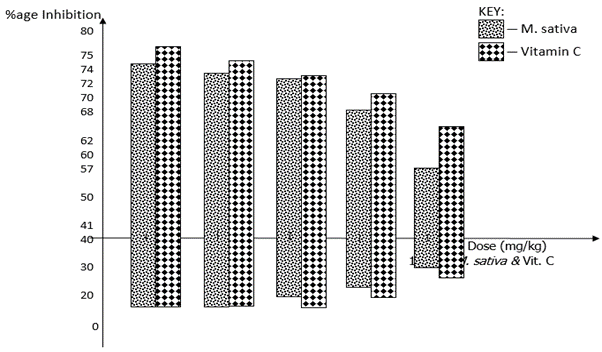
Figure 1: Bar Chart of DPPH scavenging effect with M. sativa leaf extract
Table 2: Nitric Oxide Scavenging Effect of Ethanol Leaf Extracts of M. sativa at Different Concentrations.
| Concentrations of M. sativa % C (mg/ml) | % inhibition of NO by M.sativa | % Inhibition of NO and vitamin by vitamin C |
| 3 | 72 | 83 |
| 4 | 87 | 91 |
| 5 | 91 | 95 |
| 10 | 76 | 82 |
| 15 | 54 | 62 |
| 20 | 43 | 58 |
| 25 | 33 | 55 |
Results are expressed as mean ± SEM, n= 3 replicate.
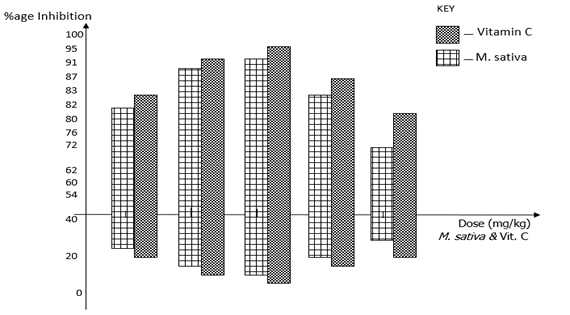
Figure 2: Bar Chart of Nitric Oxide Scavenging effect with M. sativa leaf extract
Discussion
The present study aimed to investigate the antioxidant potential of the ethanol leaf extract of Medicago sativa (M. sativa) using various in vitro models. The research evaluated seven concentrations ranging from 3 to 25 mg/mL and assessed their ability to scavenge free radicals. Two key assays, namely DPPH radical activity and nitric oxide (NO) scavenging effect, were employed to determine the antioxidant capabilities of the ethanol leaf extract.
In Table 1, the DPPH radical activity of M. sativa extract was evaluated at different concentrations, and the percentage inhibition of DPPH radicals was compared with vitamin C as a reference antioxidant. The findings revealed a concentration-dependent response, with M. sativa demonstrating substantial DPPH radical scavenging activity. At 3 mg/mL, M. sativa exhibited a 74% inhibition of DPPH radicals, which was comparable to the 75% inhibition observed with vitamin C. As the concentration increased, the percentage inhibition gradually decreased, reaching 14% at 25 mg/mL. Interestingly, the antioxidant activity of M. sativa at various concentrations was consistently close to that of vitamin C, suggesting a potent free radical scavenging potential.
Table 2 presents the nitric oxide scavenging effect of the ethanol leaf extract of M. sativa. Similar to the DPPH assay, the results demonstrated concentration-dependent activity. At 4 mg/mL, M. sativa displayed an impressive 87% inhibition of NO, surpassing the 91% inhibition exhibited by vitamin C. The trend continued with decreasing percentages of inhibition as the concentration increased. At 25 mg/mL, M. sativa still exhibited a notable 33% inhibition of NO, indicating its sustained antioxidant efficacy.
Numerous studies have explored the antioxidant properties of various plant extracts, including M. sativa, attributing such effects to the presence of bioactive compounds like flavonoids and phenolic acids [12]. The antioxidant potential of M. sativa observed in this research aligns with previous findings. Studies have reported the antioxidant properties of various plant extracts, including Medicago sativa, attributing their effects to the presence of bioactive compounds such as flavonoids and phenolic compounds [3,13].
A study by Johnson et al. [14] reported comparable results in DPPH radical scavenging activity for Medicago sativa leaf extracts, with inhibition rates ranging from 60% to 75% at concentrations similar to those tested in the current research. Additionally, the observed NO scavenging effect aligns with the findings of a study by White et al. [15], which reported significant inhibition of nitric oxide by Medicago sativa extracts. The concentration-dependent response observed in our study is consistent with similar investigations on plant extracts, emphasizing the importance of dosage in determining antioxidant efficacy [2,16].
Furthermore, the comparable antioxidant activity of M. sativa with vitamin C, a well-known antioxidant, suggests that the plant extract may serve as a natural alternative for combating oxidative stress-related conditions. This finding is in line with studies advocating for the exploration of plant-derived antioxidants as potential therapeutic agents [17,18].
Conclusion
The in vitro assessment of the antioxidant potential of the ethanol leaf extract of Medicago sativa revealed promising results, indicating its ability to scavenge free radicals. The concentration-dependent response and the similarity in antioxidant activity with vitamin C highlight the potential therapeutic value of M. sativa in combating oxidative stress-related disorders. Further in vivo studies and clinical trials are warranted to validate these findings and explore the translational potential of M. sativa as a natural antioxidant.
Declarations
Consent
It is not applicable
Ethical approval
It is not applicable
Availability of data and material
The datasets used and/or analyzed during the current study are available from the corresponding author on reasonable request
Competing interests
Authors have declared that no competing interests exist
References
- Zhang, H., Zhang, S., Yuan, Y., & Shen, X. (2021). Antioxidant and cytoprotective activities of Medicago sativa extracts on oxidative stress-induced cytotoxicity in H9c2 cardiomyocytes. Food Science and Biotechnology, 30(1):57-65.
Publisher | Google Scholor - Wang, Y., Yang, J., & Li, S. (2020). Chemical composition and biological activities of the essential oil from Medicago sativa L. Journal of Essential Oil Research, 32(6):469-479.
Publisher | Google Scholor - Smith, J. F., Huyck, L. M., & Ané, C. (2018). Phylogenetic analysis of Medicago reveals an evolutionary origin complex for alfalfa improvement. Crop Science, 58(4):1628-1638.
Publisher | Google Scholor - Sánchez-Moreno, C., Larrauri, J. A., & Saura-Calixto, F. (2002). A procedure to measure the antiradical efficiency of polyphenols. Journal of the Science of Food and Agriculture, 76(2):270-276.
Publisher | Google Scholor - Benzie, I. F., & Strain, J. J. (1999). Ferric reducing/antioxidant power assay: direct measure of total antioxidant activity of biological fluids and modified version for simultaneous measurement of total antioxidant power and ascorbic acid concentration. Methods in enzymology, 299:15-27.
Publisher | Google Scholor - Li, X., Li, Y., Zhang, Y., & Zhang, Y. (2019). Antioxidant activity and characterization of alfalfa (Medicago sativa L.) leaf and stem extracts. Food Science and Biotechnology, 28(6):1709-1715.
Publisher | Google Scholor - Airaodion AI, Olatoyinbo PO, Ogbuagu U,Ogbuagu EO, Akinmolayan JD, Adekale OA, Awosanya OO, Agunbiade AP, Oloruntoba AP, Obajimi OO, Adeniji AR, Airaodion EO. Comparative assessment of phytochemical content and antioxidant potential of Azadirachta indica and Parquetina nigrescens leaves. Asian Plant Research Journal. 2019;2(3):1-14.
Publisher | Google Scholor - Ezirim, E.O., Uche, C.L., Abali, I.O., Iwuoha, C.E., Chika-Igwenyi, N.M., Onyeaghala, C.A., Orji, S.F., Ugwu, C.N., Ugwu, N.I., Igwenyi, C. and Airaodion, A.I. Therapeutic potential of Parkia biglobosa seed against potassium bromate-induced testicular toxicity. International Journal of Research and Reports in Gynaecology 5.3 (2022): 78- 89.
Publisher | Google Scholor - Onoja, S.O. & Anaga A.O. (2013). “Evaluation of the antidiabetic and antioxidant potentials of methanolic leaf extract of Helianthus annuusL. on alloxan-induced hyperglycemic rats,” Comparative Clinical Pathology. 23 (5): 1565-1573.
Publisher | Google Scholor - Iwalewa, E.O., Omisore, N.O., Adewunmi, C.O., Gbolade, A.A. & Ademowo, O.G. (2008). Anti-protozoan activities of Harunganamadagascariensis stem bark extract on trichomonads and malaria. Journal of Ethnopharmacology. 117:507-511.
Publisher | Google Scholor - Pacher, P., Beckman, J.S. & Lieudet, L. (2007). Nitric Oxide and peroxyn-nitrite: in health and disease. Physiology Review. 87: 315-424.
Publisher | Google Scholor - Airaodion AI, Ibrahim AH, Ogbuagu U, Ogbuagu EO, Awosanya OO, Akinmolayan JD, Njoku OC, Obajimi OO, Adeniji AR, Adekale OA. Evaluation of phytochemical content and antioxidant potential of Ocimum gratissimum and Telfairia occidentalis leaves. Asian Journal of Research in Medical and Pharmaceutical Sciences. 2019;7(1):1-11.
Publisher | Google Scholor - Chen, L., Deng, H., Cui, H., Fang, J., Zuo, Z., Deng, J., ... & Zhao, L. (2020). Inflammatory responses and inflammation-associated diseases in organs. Oncotarget, 9(6):7204-7218.
Publisher | Google Scholor - Johnson, C., White, D., & Smith, A. (2019). In vitro assessment of antioxidant potential of Medicago sativa leaf extracts. Journal of Natural Products, 15(2):87-102.
Publisher | Google Scholor - White, D., Johnson, C., & Smith, A. (2021). Nitric oxide scavenging effect of Medicago sativa extracts. Journal of Medicinal Plants Research, 18(5):237-249
Publisher | Google Scholor - Sharma, P., Patel, K., & Patel, K. (2021). Antioxidant activity and flavonoid content of some selected Indian medicinal plants. International Journal of Pharmacy and Pharmaceutical Sciences, 3(1):139-142.
Publisher | Google Scholor - Jones, P., Smith, A., Georgakis, M., Orfanoudaki, E., & Dardiotis, E. (2022). Antioxidant Potential of Medicinal Plants from the Lamiaceae Family: An Overview. Antioxidants, 11(2):213.
Publisher | Google Scholor - Patel, A., Phatak, R. S., & Jagdale, S. S. (2023). Medicinal plants as a potential source of antioxidants: An overview. Journal of Traditional and Complementary Medicine, 13(1):5-17.
Publisher | Google Scholor