
Research Article
Effect of Ethanol Bean Extracts of Nigerian Theobroma Cacao on Locomotor and Exploratory Behaviour in Cd-1 Mice
- Azunna Uchenna 1*
- Godson C Ajuzie2 2
- Onwuka K Collins 1
- Agim C Sopuruchi 3
- John K Okoro 4
- Augustine T Ezike 5
- Adetula A Aderopo 6
- Nnamdi Ejieh 5
- Confidence C Agu 7
- Bright C Chukwu 8
- Mayowa O Adu 5
1Department of Human Physiology, Faculty of Basic Medical Sciences, Abia State University, Uturu, Nigeria.
2Department of Human Physiology, Faculty of Basic Medical Sciences, Gregory University, Uturu, Abia State, Nigeria.
3Department of Medical Biochemistry, Faculty of Basic Medical Sciences, Abia State University, Uturu, Nigeria.
4Department of Pharmacology and Therapeutics, Faculty of Basic Clinical Sciences, Afe Babalola University, Ado-Ekiti, Ekiti State, Nigeria.
5Department of Human Physiology, Faculty of Basic Medical Sciences, Afe Babalola University, Ado-Ekiti, Ekiti State, Nigeria.
6Department of Optometry, Faculty of Allied Health Science, Afe Babalola University, Ado-Ekiti, Ekiti State, Nigeria.
7Department of Medical Laboratory Science, Faculty of Allied Health Science, Afe Babalola University, Ado-Ekiti, Ekiti State, Nigeria.
8Department of Human Anatomy, Faculty of Basic Medical Sciences, Afe Babalola University, Ado –Ekiti, Ekiti State, Nigeria.
*Corresponding Author: Azunna Uchenna, Department of Human Physiology, Faculty of Basic Medical Sciences, Abia State University, Uturu, Nigeria.
Citation: Uchenna A, Godson C. Ajuzie, Onwuka K. Collins, Agim C. Sopuruchi, John K. Okoro, et al. (2026). Effect of Ethanol Bean Extracts of Nigerian Theobroma Cacao on Locomotor and Exploratory Behaviour in Cd-1 Mice, Journal of Brain Research and Neurology, BioRes Scientia Publishers. 5(1):1-6. DOI: 10.59657/2992-9768.brs.26.020
Copyright: © 2026 Azunna Uchenna, this is an open-access article distributed under the terms of the Creative Commons Attribution License, which permits unrestricted use, distribution, and reproduction in any medium, provided the original author and source are credited.
Received: March 11, 2026 | Accepted: March 25, 2026 | Published: April 01, 2026
Abstract
The effect of ethanol bean extract of T. Cacao on Locomotory and exploratory neurobehaviours was investigated in mice. A total of fifty (50) Swiss white mice weighing 18-32g were used in the study. The Swiss white mice were randomly grouped into three groups, namely control, low dose and high dose groups. The control group was fed with portable water, the low-dose and high-dose groups were fed with 500mg/kg and 1000mg/kg body weight of the beans extract of T. Cacao, respectively, for 30 days before the experiment commenced. The three groups were allowed to drink water freely. The Neuro-behavioural parameters studied were locomotor and exploratory behaviours. The open field maze apparatus was used for locomotor and exploratory behaviors. The results showed that mice treated with T. Cacao exhibited decreased locomotory and exploratory behaviors compared to the high-dose and control groups. There was a significant decrease (p<0.001), (p<0.001) and (p<0.01) in line crossings and rearings of the animals treated with T. Cacao extracts, respectively, compared with the control group. The frequency of grooming and grooming duration was lower in animals treated with low and high doses of T. Cacao extract compared to the control group. The central square entry and duration were significantly lower in the low dose group compared to the control at (P<0.01) and (P<0.001), respectively. Also, in the centre square entry duration, the high dose was lower than the control at (P>0.05). This work has shown that T. Cacao reduces locomotory and exploratory behavior in mice treated with T. Cacao.
Keywords: ethanol extract; theobroma cacao; locomotory; exploratory neuro-behaviour; CD- 1 mice
Introduction
T. Cacao is an evergreen tree that can grow up to fifteen meters in height and live to around sixty years. The flowers are tiny and white, pink or violet in color, growing directly from the trunk or primary branches at the same time as the fruit pods, which hang from short stems. One tree can develop around a hundred thousand flowers a year. The pods start out green and turn yellow, red, or purple with time [1].
T. Cacao is only found growing wild in southern Mexico. Cultivated cocoa may be found in all tropical rainforests of the Americas, and this has been the case since prehistoric times. At present, it is also grown as a crop in Africa and Southeast Asia. Cocoa trees are shade-loving plants that only grow in tropical areas. They are often grown alongside banana crops in order to provide the necessary shade [1].
Cocoa is a stimulant and contains the compounds Theobromine and caffeine. The beans contain between 0.1% and 0.7 percentage caffeine, whereas dry coffee beans are about 1.2 percentage caffeine [2]. Research has shown that foods rich in cocoa appear to reduce blood pressure [3]. Also, the consumption of flavonol-rich cocoa helps to lower the rates of heart disease and cancer [4,5]. Cocoa has anti-inflammatory, anti-ulcerative and anti-microbial properties [6].
Chocolate derived from cocoa is said to have numerous health benefits. It has extraordinary nutritional properties, including significant levels of proteins, tryptamine and serotonin. It also has preventative properties in terms of balancing cholesterol levels when used frequently in the proper amounts, and is often recommended as a regular component of a healthy diet [1].
Hollenberg and colleagues of Harvard Medical School studied the effects of cocoa and flavanols on Panama's Kuna people, who are heavy consumers of cocoa. The researchers found that the Kuna people living on the islands had significantly lower rates of heart disease and cancer compared to those on the mainland, who do not drink cocoa as much as on the islands. It is believed that the improved blood flow after consumption of flavanol-rich cocoa may help to achieve health benefits in the heart and other organs. In particular, the benefits may extend to the brain and have important implications for learning and memory [4,5].
Foods rich in cocoa appear to reduce blood pressure according to an analysis of previously published research in the April 9, 2017 issue of Archives of Internal Medicine [3].
A 15-year study of elderly men published in the Archives of Internal Medicine found a 50% reduction in cardiovascular mortality and a 47% reduction in all-cause mortality for the men regularly consuming the most cocoa, compared to those consuming the least cocoa from all sources [7].
World Health Organization (WHO) estimated that about 450 million people worldwide suffer from a mental or behavioral disorder [8]. The majority of such patients in the developing countries still rely on traditional healing practices and medicinal plants for treatment of these conditions [9]. The effect, therefore, of T. Cacao on Locomotion and exploration behaviors is investigated in this study.
Materials and Methods
Research Location
The research was conducted in the Animal House of the Department of Human Physiology, College of Medicine and Health Sciences in Abia State University, Uturu, Nigeria. The physiology laboratory was chosen as a reference research centre, considering the availability of modern equipment in the laboratory to test for Neurobehavioral studies in CD-1 Mice.
Ethical Approval
The authors hereby declared that the rule of laboratory animal care was maintained. The animals were examined and approved by the appropriate ethics committee.
Sample Identification and Collection
The cocoa bean was identified in the Department of Forestry and Environmental Management, Michael Okpara University of Agriculture, Umudike, Abia State, Nigeria, by a renewed botanist with the Voucher number (MOUAU/VPP/18/004). The ripe and near-ripe cocoa pods, judged by their color were harvested from the trunk and branches of the cocoa tree with a curved knife on a long pole in farm land located in Okporoenyi village in Bende Local Government Area of Abia State, Nigeria.
Preparation of Crude Extract
The crude extract was prepared according to the method of Parry et al. [10] and Eno [11]. In brief, the cocoa pods were opened, typically with a machete, to expose the beans. The cocoa seeds were removed; the pulp and the rind were discarded. The cocoa beans were fermented for seven days and dried in the sunlight for fourteen days. The dried beans were blended into a fine powder using an electronic blending machine and stored in a refrigerator for further use. 200g of the powdered cocoa beans sample was weighed and Soxhlet-extracted with 1000ml of 95% ethanol for 10 hours at 100 oC. The extract was then slowly evaporated to dryness in an electric oven at 35-40 oC and stored in the refrigerator at -4 oC for further use.
Experimental Design
The study was conducted using Fifty (50) adult Swiss white mice of either sex (Weighing 20 to 32 g) purchased from the animal house facility of the Department of Physiology, Abia State University, Uturu, Nigeria. The animals were housed in polypropylene cages at room temperature in the animal house. The mice were maintained on standard laboratory animal feed and allowed to drink water adlibitum. The mice were allowed to acclimatize with the laboratory environment for 14 days before commencement of the study.
The animals were divided into three groups of ten each: the control group, the low dose group and the high dose group. The mice were subjected to the following treatment for twenty-eight days (28) days. Animals in the control group received normal water, the low dose group received normal water and 500 mg/kg body weight of ethanol bean extract of T. Cacao, and the high dose group received normal water and 1000 mg/kg body weight of ethanol bean extract of T. Cacao for 28 days.
Open Field Maze Apparatus
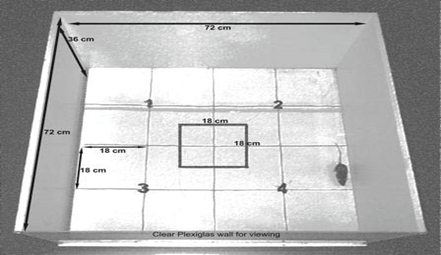
Figure 1: Open field maze apparatus
Experimental Procedure
The mice were carried to the test room in their home cages and handled by the base of their tails at all times. The mice were placed into the centre or one of the four corners of the open field maze and allowed to explore the apparatus for five minutes. The experimenter was located exactly about 1 meter away from the apparatus and recorded the behavior of the animals. A video camcorder located 150 cm above the centre of the maze also recorded the mice's behaviours for rescoring the video. After the five-minute test, the mice were removed from the open field maze by the base of their tails and returned to their home cages. The open field maze was cleaned with a solution of 70% ethyl alcohol every time a mouse was removed and allowed to dry between tests [12].
Behavior Scored
The following behaviors were scored during the test.
Line crossing: frequency with which the mice crossed one of the grid lines with all four paws.
Centre square entries: frequency with which the mice crossed one of the red lines with all four paws into the central square.
Centre square duration: duration for the time the mice spent in the central square.
Rearing: frequency with which the mice stand on their hind legs in the maze.
Grooming duration: duration of time the animal spent licking or scratching itself while stationary.
Grooming: Frequency with which the mice scratched themselves while stationary.
Statistical Analysis
The results were presented as mean ± SEM (standard error of mean) and analyzed using two-way ANOVA followed by Dunnett post hoc test for multiple comparisons. A difference was considered significant at p less than 0.05.
Results
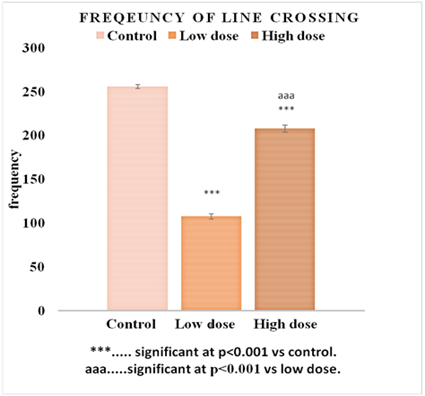
Figure 2: Comparison of the frequency of line crosses of the Normal and T. Cacao treated Groups in the 5 minutes of the Open Field Maze Test. The figure showed that the T. Cacao-treated groups had lower line crossings (p less than 0.001) compared to the control.
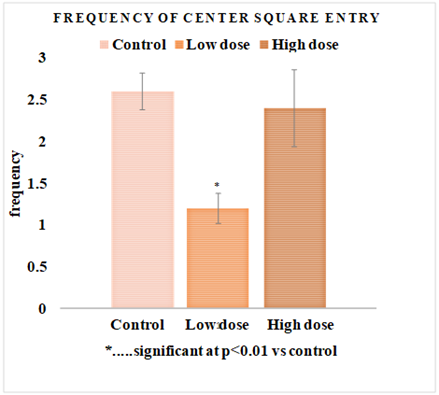
Figure 3: Comparison of the frequency of centre square entries of the Normal and T. Cacao treated Groups in the 5-minute open field test. The figure showed that the animals treated with a low dose of T. Cacao had a significant (P less than 0.01) decrease in CSE compared to the control group.
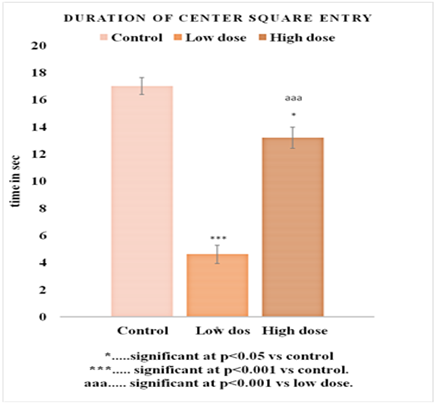
Figure 4: Comparison of the duration of centre square entries of the Normal and T. Cacao treated groups in the 5-minute open field test. The figure showed that the animals treated with T. Cacao spent less time in the centre square entry (p less than 0.001 and p less than 0.05) compared to the control group.
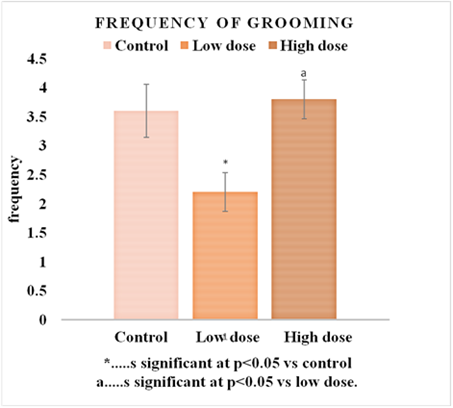
Figure 5: Comparison of the frequency of grooming of the Normal and T. Cacao treated groups in the 5-minute open field test. The figure showed that the results was significance (p less than 0.05) decreased in the frequency of grooming of the animals treated with a low dose of T. Cacao compared to the normal group.
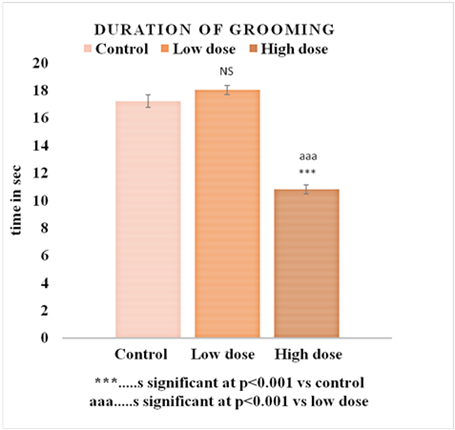
Figure 6: Comparison of the duration of grooming of the Normal and T. Cacao treated groups in the 5-minute open field test. The figure showed that the animals that took a high dose of T. Cacao had lower (p less than 0.001) grooming duration compared to control group.
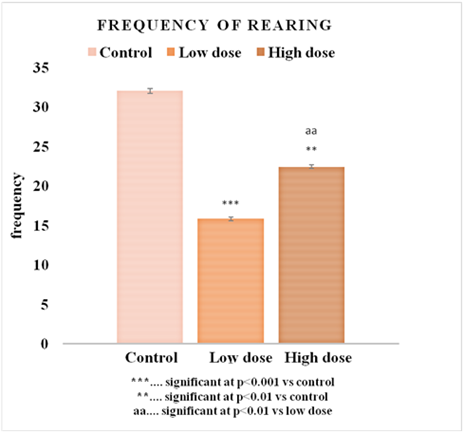
Figure 7: Comparison of the frequency of rearing of the Normal and T. Cacao treated groups in the 5-minute open field test. The figure showed that the animals treated with T. Cacao had a lower (p less than 0.001 and p less than 0.01) frequency of rearings compared to control animals.
Discussion
In the open field maze and the light-dark transition box test, the frequency of line crossings, centre square entry, duration, rearing, grooming and grooming duration were used as measures for locomotor and exploratory activities. This study has shown that T. Cacao reduces locomotor and exploratory activity in test mice using the open field maze test. This was seen in the frequency of the line crossed in the open maze test, which was lower (p less than 0.001) in the tested groups compared to the control. The frequency of rearing was statistically significantly (p less than 0.001 and p less than 0.01) lower in mice treated with T. Cacao compared to the control group. The centre square entry and duration were statistically significantly lower in mice treated with T. Cacao at a moderate dose compared to the control group. The frequency of grooming and grooming duration was lower in animals treated with low and high doses of T. Cacao extract compared to the control group. Also, in the centre square entry duration, the treated animals spent less time at (p less than 0.001 and p less than 0.05) than the control animals. Rearing allows the mice to obtain information about the environment, and appears to represent exploration. The frequency of line crosses and frequency of rearing indicate enhanced locomotor and exploratory behaviours [13,14]. This means that the locomotor and exploratory activities of the mice treated with T. Cacao extract were probably reduced. Some unidentified constituents of T. Cacao likely inhibit the locomotory and exploratory region that accelerates the motor centre in the central nervous system, particularly the motor areas responsible for locomotion [15,16].
References
- Ratsch, C. (1998). The encyclopedia of psychoactive plants: Ethnopharmacology and its applications. Park Street Press.
Publisher | Google Scholor - Amos, S., Kolawole, E., Akah, P., Wambebe, C., & Gamaniel, K. (2001). Behavioural effects of aqueous extract of Guiera senegelensis in mice and rats. Phytomedicine, 8(5):358–361.
Publisher | Google Scholor - Taubert, D., Roesen, R., & Schömig, E. (2007). Effect of cocoa and tea intake on blood pressure: A meta-analysis. Archives of Internal Medicine, 167(7):626–634.
Publisher | Google Scholor - Messerli, F. H. (2012). Chocolate consumption, cognitive function, and Nobel laureates. The New England Journal of Medicine, 367:1562–1564.
Publisher | Google Scholor - Bayard, V., Chamorro, F., Motta, J., & Hollenberg, N. K. (2007). Does flavanol intake influence mortality from nitric oxide–dependent processes? Ischemic heart disease, stroke, diabetes mellitus, and cancer in Panama. International Journal of Medical Sciences, 4(1):53–58.
Publisher | Google Scholor - Tzounis, X., Rodriguez-Mateos, A., Vulevic, J., Gibson, G. R., Kwik-Uribe, C., & Spencer, J. P. (2011). Prebiotic evaluation of cocoa-derived flavanols in healthy humans using a randomized, controlled, double-blind, crossover intervention study. The American Journal of Clinical Nutrition, 93(1):62–72.
Publisher | Google Scholor - Buijsse, B., Feskens, E. J. M., Kok, F. J., & Kromhout, D. (2006). Cocoa intake, blood pressure, and cardiovascular mortality: The Zutphen Elderly Study. Archives of Internal Medicine, 166(4):411–417.
Publisher | Google Scholor - World Health Organization. (2001). The world health report 2001: Mental health—New understanding, new hope. World Health Organization.
Publisher | Google Scholor - Magaji, M. G., Yaro, A. H., Adamu, A., Yau, J., Malami, S., Abubakar, Y., & Husaini, I. M. (2009). Some neuropharmacological studies on hydroalcoholic extract of Maerua angolensis DC (Capparidaceae) in mice and chicks. International Journal of Medical Sciences, 3:14–21.
Publisher | Google Scholor - Parry, O., Okwuasaba, F. K., & Ejike, C. (1987). Skeletal muscle relaxant action of an aqueous extract of Portulaca oleracea in the rat. Journal of Ethnopharmacology, 19:247–253.
Publisher | Google Scholor - Eno, A. E. (2003). Physiology of the nervous system: An introductory text with clinical implications and simplified section on special senses (1st ed.). Calabar, Nigeria.
Publisher | Google Scholor - Brown, R. E., Covery, S. C., & Moore, A. K. (1999). Differences in measures of exploration and fear in MHC-congenic C57BL/6J and B6-H-2k mice. Behavior Genetics, 26:263–271.
Publisher | Google Scholor - Madhusudhanan, N., Lakshmi, T., Kumar, S. G., & Venu, G. (2011). In vitro antioxidant and free radical scavenging activity of aqueous and ethanolic flower extract of Nymphaea alba. International Journal of Drug Development and Research, 3:252–258.
Publisher | Google Scholor - Elkins, G., Rajab, M. H., & Marcus, J. (2005). Complementary and alternative medicine use by psychiatric patients. Psychological Reports, 96:163–166.
Publisher | Google Scholor - Osim, E. E. (2008). Neurophysiology (2nd ed.). El Sapphire Limited.
Publisher | Google Scholor - Schroeter, H., Heiss, C., Balzer, J., Kleinbongard, P., Keen, C. L., & Hollenberg, N. K. (2006). (−)-Epicatechin mediates beneficial effects of flavanol-rich cocoa on vascular function in humans. Proceedings of the National Academy of Sciences of the United States of America, 103(4):1024–1029.
Publisher | Google Scholor