Short Communication
Access to Contraceptives and Utilization Barriers in Pakistan: A Current Public Health Update
- Fazli Azim *
- Hassan Mushtaq
Department of Epidemiology and Public Health, UVAS, Lahore, Pakistan.
*Corresponding Author: Fazli Azim, Department of Epidemiology and Public Health, UVAS, Lahore, Pakistan.
Citation: Azim F, Mushtaq H. (2026). Access to Contraceptives and Utilization Barriers in Pakistan: A Current Public Health Update, Journal of Women Health Care and Gynecology, BioRes Scientia Publishers. 6(1):1-7. DOI: 10.59657/2993-0871.brs.26.106
Copyright: © 2026 Fazli Azim, this is an open-access article distributed under the terms of the Creative Commons Attribution License, which permits unrestricted use, distribution, and reproduction in any medium, provided the original author and source are credited.
Received: January 27, 2026 | Accepted: March 24, 2026 | Published: April 01, 2026
Abstract
Pakistan’s population stands at 241.5 million, making it the fifth-largest in the world. The country is growing fast, too, at about 2.4% every year. But with this growth come some real challenges: high rates of maternal deaths, a lot of teenage pregnancies, and many people who still can’t get the contraception they need. On average, women in Pakistan have 3.6 children, but there’s a big gap between rural and urban areas. In the countryside, the number jumps to 3.9, while it’s 2.9 in the cities. Still, most women say they’d actually prefer to have fewer kids about 0.7 less than the current average. The goal, at least on paper, is a fertility rate of 2.9. Family planning programs have been around for decades, and modern contraceptives are available. But regular use is still low. This review digs into what’s happening with contraceptive access in Pakistan, and what’s getting in the way. It highlights the need for approaches that actually fit the local culture and respect people’s rights, not just one-size-fits-all solutions. The focus here isn’t just on what methods are out there, but who’s using them, why, and how well the information is getting through. The article looks at both sides of the equation: how well services are delivered (are providers trained, are supplies reliable) and what people know or believe about family planning. It also explores when people start using contraception, which methods they pick, and how these choices line up with what they want for their families, like when to have their first or last child.
Keywords: contraceptives; family planning; population control; access; utilization barriers; public health; Pakistan
Introduction
Pakistan’s population has surpassed 240 million, and its total fertility rate remains significantly higher than that of neighboring countries. This puts immense pressure on healthcare, education, employment, food resources, and the environment. Rapid population growth is not just a figure it is one of Pakistan’s most urgent public health and development challenges (Kumari, Do, Madkour, & Wisniewski, 2024). Family planning and contraceptive use are among the most effective and affordable means to improve maternal and child health and to achieve sustainable population growth. The third Sustainable Development Goal sets a clear objective: universal access to sexual and reproductive healthcare by 2030. Modern contraceptives are central to this plan. They are not only for preventing pregnancy they save lives. Without the use of modern methods, unplanned and high-risk pregnancies increase, putting both mothers and newborns at greater risk (Lomazzi, Borisch, & Laaser, 2014, Ahmed & McGovern, 2023). It is acknowledged that using modern contraceptives is crucial to reaching the SDGs and may enhance the health of mothers, newborns, and children (Jamali & Simon, 2024). When current contraceptive techniques are not used, unplanned, high-risk pregnancies result, which raises mother and newborn mortality (Jamali & Simon, 2024).
In 2017, modern contraceptives were estimated to have prevented 308 million unplanned births. That number could have been even higher by an additional 67 million if everyone with unmet needs had access. Yet in 2019, only 44% of the world’s 1.1 billion women of reproductive age used modern contraception, despite the clear need (Budu et al., 2023, Budu et al., 2023).
Globally, modern contraceptive use among married women increased only slightly, from 55% in 2000 to 57% in 2019. Pakistan, however, tells a different story. Nearly every married woman 96% is aware of at least one modern contraceptive method. Still, usage rates remain low. Unsafe abortions are alarmingly frequent, totaling 2.2 million annually, and 17.8% of married women have unmet family planning needs. If Pakistan addresses this gap, the Contraceptive Prevalence Rate (CPR) could rise from 34% to 60% by 2030, which would be transformative for reproductive health nationwide (Ahmed & McGovern, 2023, Kumari et al., 2024). Nevertheless, progress is not uniform everywhere. Significant disparities persist between wealthier and poorer countries. Studies show that factors such as education, income, and couple communication influence family planning decisions. Media exposure, religious and cultural beliefs, and misconceptions about side effects also play a role (Ghani, Hashmi, e Sadaf, & Nadeem, 2024, Negash, Belachew, Asmamaw, & Bitew, 2022).
Currently, only 34% of married women in Pakistan use any form of contraception 25% use modern methods, and 9 percentage depend on traditional ones. The concerning issue is that contraceptive use has seen almost no progress in the last five years. Rates actually declined from 35% in 2012-13 to 34% in 2018-19. During this period, 5% of births were unwanted, 7% occurred too soon, and the abortion rate surged to 50 per 1,000 women aged 15 to 49. Pakistan’s large and rapidly growing population is straining all development indicators, particularly maternal and child health. Expanding access to modern contraceptives is crucial for improving living standards (Ghani et al., 2024; Girma, Sultan, & Leges, 2016, Haakenstad et al., 2022). Pakistan's huge size and rapid population expansion provide challenges to all development indices, especially maternal and child health. This suggests that in order to manage Pakistan's growing population and enhance its standard of living, more contraceptives especially contemporary ones must be used (Kamal, Malik, Batool, & Rasul; Naz, Kamal, Kamran, & Trueha, 2023).
A recent DAWN article covered a 2023 survey by the National Institute of Population Studies (NIPS) and UNFPA in Punjab. They surveyed nearly 2,000 households across 11 districts. Their findings showed that while knowledge about family planning is widespread, only 7.8% of women were pregnant at the time, and the CPR rose to 46% in 2020 up from 38%. The usage of modern contraceptives increased to 31.7%. The survey aimed to monitor trends, evaluate progress toward policy objectives, and determine what is needed to close the gap in unmet contraceptive needs and improve access and service quality (Ghani et al., 2024, News, 2023, Naz et al., 2023).
Family planning is more than just a health intervention it is a cornerstone of the Safe Motherhood Initiative, which also promotes prenatal care, postnatal care, and safe delivery. By allowing women to avoid unintended pregnancies and the associated complications, family planning serves as a powerful tool to reduce maternal mortality and improve overall reproductive healthcare (Islam, 2024). Contraceptive use extends beyond health. It is a cost-effective approach to advancing several Sustainable Development Goals. Although awareness of the benefits is increasing, countries like Pakistan still lag in the widespread adoption of modern contraceptives. The current challenge is to convert awareness into action ensuring that every woman has genuine access to the family planning resources she requires for contraceptive use (Islam, 2024; Starbird, Norton, & Marcus, 2016).
Pakistan introduced modern contraceptives back in 1976, yet the country’s contraceptive prevalence rate still lags at just 29%. With a total fertility rate of 4.85, Pakistan now stands as the most populous nation in its region. Despite this, government attention to the urgency and benefits of slowing population growth remains limited. Health problems, especially for mothers and children, persist everywhere (U. G. KAMRAN; M. U. Rehman, 2018). Unwanted pregnancy is one of the biggest reproductive health challenges (USAID Health Policy Development, 2010). Unsafe abortion follows as a leading cause of maternal illness and death (Nasir, 2013). If modern contraceptives were widely and correctly used, millions of women’s lives could be saved. But with current usage rates, Pakistan falls short of Millennium Development Goals 4 and 5. Achieving real progress demands coordinated, large-scale action from every key group involved (Lomazzi et al., 2014; Sachs, 2012).
Non-governmental organizations work hard to support reproductive health, but local government programs haven’t delivered the results people hoped to see. Pinpointing exactly why modern contraceptive use stays low is tough. To improve the system, program leaders need solid, evidence-based decisions built on reliable data (Lomazzi et al., 2014). Reproductive health strategies must fit the local context and consider real risk factors—otherwise, the same problems will repeat, and the damage will continue. Every stakeholder needs to step up and act to increase the use of modern contraception in Pakistan (I. Kamran, Niazi, Parveen, Khan, & Khan, 2019). Right now, government and non-government organizations do offer free family planning services in hospitals, clinics, and health centers around the country (I. Kamran et al., 2019). In Lahore, researchers surveyed married women aged 15 to 49 and found that most medical facilities provided family planning services (Najmi et al., 2018; Shah, Wang, & Bishai, 2011). Pakistan actually began national family planning efforts in the 1960s. Yet, uptake of contraceptives has been slow and inconsistent ever since. In theory, modern contraceptives are available through public, private, and NGO channels, but in practice, a tangled web of demand-side and access barriers keeps usage low. This assessment aims to pull together the latest evidence on contraceptive access in Pakistan and shed light on the barriers from a public health perspective (Lomazzi et al., 2014; Shah et al., 2011).
The current state of access to contraceptives in Pakistan is critically examined in this review article, along with the various obstacles that prevent their effective use. The assessment emphasizes the need for integrated, rights-based, and culturally sensitive methods to boost population control initiatives and increase contraceptive adoption in Pakistan.
Overview of Family Planning and Contraceptive Use in Pakistan
Contraceptive Prevalence and Unmet Need
Although Pakistan's contraceptive prevalence rate (CPR) has somewhat improved over time, it is still below the global average. The desire to postpone or restrict births without using any kind of contraception is known as an unmet need for family planning, and it is reported by a significant percentage of married women of reproductive age. Unwanted pregnancies, unsafe abortions, and avoidable maternal morbidity and mortality are all directly impacted by this unmet need (M. U. Rehman, 2018).
Commonly Used Contraceptive Methods
Condoms, oral contraceptive pills, injectable, intrauterine devices (IUDs), and female sterilization are the most widely used methods in Pakistan. Condoms are the major male-controlled approach, and male involvement is still minimal. Despite their efficacy, long-acting reversible contraceptives (LARCs) are underutilized because of hurdles to access and perception (Islam, 2024).
Access to Contraceptives in Pakistan
Public Sector Provision
The public sector primarily offers family planning services through Basic Health Units (BHUs), Rural Health Centers (RHCs), and tertiary institutions. The Lady Health Worker (LHW) initiative has played a major role in expanding access to contraceptives in both rural and urban communities. However, unequal supply chains, a limited diversity of techniques, and a shortage of labour often compromise service availability.
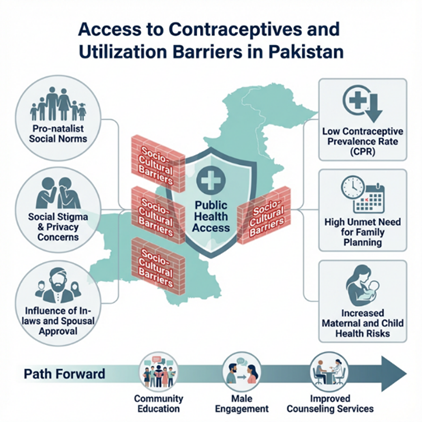
Figure 1: Access to contraceptives and utilization barriers in Pakistan.
Private Sector and NGOs
Private clinics, pharmacies, and non-governmental organizations (NGOs like UNFPA) contribute significantly to contraceptive distribution, particularly in urban areas. NGOs often provide higher-quality counseling and a broader method mix, yet their reach remains limited in remote and marginalized regions. Cost remains a major barrier in private sector utilization for low-income populations (M. Rehman & Malik, 2025).
Geographic and Regional Disparities
Access to contraceptives varies widely across provinces and districts. Urban areas generally have better service availability than rural regions, while provinces such as Baluchistan and parts of Khyber Pakhtunkhwa face chronic shortages of facilities and trained providers. These disparities exacerbate inequities in reproductive health outcomes (M. Rehman & Malik, 2025).
Table 1: Shows the factors associated with the access and utilization barriers in Pakistan.
| S. No | Domain | Ground Reality in Pakistan | Public Health Implications |
| 1 | Availability & Accessibility | Pharmacies, Lady Health Workers, Doctor clinics, and NGOs, furthermore urban areas have well access, ruler and remote districts face severe service gaps. | Interrupted use, method discontinuation, increased unmet need for family planning and Local disparities in fertility rates, maternal and child health outcomes |
| 2 | Sociocultural Access/Norms & Socioeconomic Affordability | Large family preferences, a preference for sons, early marriage, and the social stigma associated with using contraceptives are still prevalent. Low-income groups' access is restricted by private-sector expenses and indirect costs (transport, time off work). | Short birth intervals, high fertility, and delayed family planning adoption. Unwanted pregnancy rates are higher and utilization is lower in low-income households. |
| 3 | Religious Misconceptions, Education and Awareness | Misinterpretation of religious teachings discourages contraceptive use, lack of knowledge | Resistance to modern contraceptives |
| 4 | Women’s Independence & Male partner Contribution | Women's decision-making authority is limited; husbands or older family members frequently make reproductive decisions. Male involvement in FP is minimal, and condoms are underutilized despite being accessible. | Low use of contraceptives; higher risks to maternal health. Inconsistent use and gender disparity for contraception. |
| 5 | Health System Factors | Inadequate provider training, lack of privacy, provider bias, and weak referral systems affect service quality. | Poor client satisfaction; reduced trust in health services. |
| 6 | Policy and Governance | Family planning policies exist but suffer from weak implementation, limited funding, and coordination challenges post-devolution. | Slow progress toward population control and SDG targets. |
Barriers to Contraceptive Utilization
Sociocultural and Religious Factors
A lot of people grow up in communities where big families, marrying young, and hoping for sons aren’t just common they’re expected. These ideas shape how people think about using contraception. sometimes, folks point to religion as the reason they avoid family planning, even though most scholars agree Islam doesn’t actually forbid it. Stigma runs deep too. People worry what their neighbors or family will say if they use birth control, and that fear keeps many from even considering it (just look at Table 1).
Gender Dynamics and Women’s Autonomy
Women face another hurdle: they often don’t get the final say. In many families, it’s the husband or older relatives who call the shots about having kids. If men aren’t involved in the conversation or don’t want to talk about family planning, it’s no surprise that contraceptive use stays low (again, see Table 1).
Educational and Awareness Barriers
Education or the lack of it makes things harder. When women can’t read or haven’t had much schooling, understanding their options gets tricky. Myths about birth control are everywhere: people worry it’ll make them infertile, cause them to gain weight, or even ruin their health long-term. Without good counseling, these fears stick around.
Economic Constraints
Money’s another big obstacle. If couples have to pay out of pocket because the free supplies have run out, many just can’t afford it. And it’s not just the cost of the pills or injections getting to the clinic can mean paying for transport and losing a day’s wages. All of that adds up, and sometimes, it’s just too much.
Health System and Service Delivery Challenges
Health systems here struggle with a lot stock-outs happen all the time, people don’t have many options to choose from, there’s barely any privacy, and on top of that, providers bring their own biases into the mix. Sometimes, health workers actually talk people out of using certain methods just because of their age, how many kids they’ve had, or their own personal opinions. That kind of attitude chips away at reproductive rights and stops people from making their own decisions.
Policy and Governance Issues
Even though there are policies on paper, family planning usually takes a back seat when it comes to political attention and funding. After decentralization, things got even messier. Federal and provincial governments split up responsibilities, but coordination fell through the cracks, and now programs don’t always run smoothly or equally across the country.
Table 2: Highlights key contraceptive methods commonly used in Pakistan.
| S. No | Contraceptive Method | Type (Barrier) | Level of Use | PH Notes |
| 1 | Male Condom | Barrier (Male Controlled) | High (most commonly used modern method) | Provides dual protection against STIs; usage is often inconsistent. |
| 2 | Oral Contraceptive Pills (OCPs) | Hormonal (Short-acting) | Moderate | Requires regular adherence; myths about side effects reduce continuation. |
| 3 | Injectable Contraceptives | Hormonal (Short-acting) | Moderate and increasing | Popular due to privacy; concerns about menstrual changes affect acceptance. |
| 4 | Intrauterine Device (IUD) | Long-acting reversible | Low to moderate | Highly effective but underutilized due to fear, lack of trained providers. |
| 5 | Traditional Methods | Non-modern | Moderate | High failure rates; widely used due to cultural acceptability. |
Public Health Implications
Low contraceptive use hits public health in Pakistan hard. You see more mothers dying, pregnancies spaced too closely, babies born too small, and kids with poor health—most of it tied to high fertility rates. Population growth slows down progress on the Sustainable Development Goals and makes it harder to reach both national and international targets. It also puts a real strain on health services. So, getting more people access to contraceptives isn’t just about reproductive health. It’s a huge public health challenge and a key step for the country’s development. (Organization, 2015; Ugwu et al., 2025).
Strategies to Improve Access and Utilization
Keeping a steady supply of contraceptives matters, but that’s just the start. People need more choices, and providers should know what they’re talking about. If you really want more people to use family planning, you can’t do it in isolation tie it in with maternal, newborn, and child health services. That way, you reach more people when it counts (Organization, 2015).
Misconceptions and pushback from society don’t just disappear. You have to go where people listen: get men involved, reach out to religious leaders, and bring in community influencers. Use messages that actually fit the culture. Education and economic opportunities matter, too-they help women make their own choices and get men to step up. If you want men to really take part, you need family planning programs that actually speak to them. When men feel included, you get more acceptance and couples make better decisions together (Ugwu et al., 2025). Scaling up what works takes more than good ideas. You need leaders who stick with it, real funding, and people working together across different sectors.
Take a look at Table 2 it highlights some important factors for expanding access to contraceptives and breaking down the barriers people still face. A 2023 panel study from Punjab by NIPS and UNFPA points out a few key things:
- How much providers know about family planning and contraceptives.
- How much the public knows about different methods and their plans to use them.
- When people first start using contraceptives.
- Why people stop or never start using them in the first place.
- When people want to have their first and last child, plus issues like unintended pregnancies or not getting the contraception they need.
- Whether contraceptive supplies are available, and how different methods are being used over time.
- All of this helps explain what’s working-and what’s still getting in the way.
Conclusion
This analysis digs into how a tangled mix of provider skill, client knowledge, available services, and social context shapes who actually gets and sticks with family planning. At the heart of it, the technical know-how of the provider really sets the tone for quality. Well-trained providers do more than just hand out information they clear up confusion, fight off myths, help clients make informed choices, and make sure people use contraceptives correctly and consistently (Soin, Yeh, Gaffield, Ge, & Kennedy, 2022). Yet, in many places, providers just aren’t given enough solid training. Their counselling sometimes falls short, and that gets in the way of effective care. The public knows more about modern contraceptives than before, but real understanding-about how well they work, what side effects actually happen, and how to use them right-lags behind (Mumtaz & Khan, 2025).
This lack of deep knowledge leads to uneven use. People start and stop contraceptives, sometimes give up early, or use them the wrong way. So even when people say they want to use family planning, actual usage just doesn’t hit the mark (Mumtaz & Khan, 2025). Other factors matter too. Age, how many kids someone already has, whether they talk with their spouse, what they’ve heard about side effects, cultural expectations, and whether they can get the method they want—all of these shape which contraceptive a person chooses and whether they use it at all. Young women, especially, face delays: pressure to have children early, little say in their own choices, and a shortage of providers who know how to talk to youth all get in the way (Jafree & Barlow, 2023).
When couples plan for children—deciding when to have the first, or how many to have they often put off contraception until they reach their ideal family size or the right mix of sons and daughters. Some people stay away from contraception altogether because they’re afraid of side effects, believe misinformation, deal with pushback from partners or family, or face cultural and religious barriers. Poor counselling and a patchy supply chain don’t help either (Jafree & Barlow, 2023; Memon et al., 2023). All these hurdles add up. Unwanted births and a stubbornly high unmet need for contraception show where the system falls short. Missed chances for good counselling, follow-up, and letting clients switch methods when needed make things worse (Memon et al., 2023). Keeping people on family planning hinges on having a steady supply of contraceptives. When stocks run out or choices are limited, people lose faith and may just stop using them. The patterns of which methods people use often shift, not because of personal choice, but because of program priorities, supply problems, or changing preferences. Real, informed, voluntary choice still isn’t the norm (Abdullah et al., 2024).
References
- Abdullah, M., Ahmed, S., Malick, A. A., Ihsan, M. T., Shah, M., et al. (2024). Knowledge, practices, and barriers to access of emergency contraceptive pills in married women and men: a multicenter clinic-based cross-sectional study from Karachi, Pakistan. BMC Public Health, 24(1):2886.
Publisher | Google Scholor - Ahmed, A., McGovern, T. (2023). Sexual and Reproductive Health and Rights. Global Health Law and Policy: Ensuring Justice for a Healthier World. Singapore: Springer Nature Singapore, 447.
Publisher | Google Scholor - Budu, E., Dadzie, L. K., Salihu, T., Ahinkorah, B. O., Ameyaw, E. K., et al. (2023). Socioeconomic inequalities in modern contraceptive use among women in Benin: a decomposition analysis. BMC Women's Health, 23(1):444.
Publisher | Google Scholor - Ghani, A., Hashmi, H. A., e Sadaf, D., Nadeem, M. S. (2024). Exploring cultural hindrances: a thorough examination of men's views on family planning, decision-making authority, and use of contraception. Pakistan Journal of Humanities and Social Sciences, 12(2):1241-1251.
Publisher | Google Scholor - Girma, T., Sultan, A., Leges, K. (2016). Prevalence and factors influences utilization of modern contraceptive methods among married women of reproductive age group (15-49 Years) in Holeta town, Oromia, Ethiopia 2016. J Preg Child Health, 3(272):2.
Publisher | Google Scholor - Haakenstad, A., Angelino, O., Irvine, C. M., Bhutta, Z. A., Bienhoff, K., et al. (2022). Measuring contraceptive method mix, prevalence, and demand satisfied by age and marital status in 204 countries and territories, 1970-2019: a systematic analysis for the Global Burden of Disease Study 2019. The Lancet, 400(10348):295-327.
Publisher | Google Scholor - Islam, M. R. (2024). Family planning and sustainable development goals. In Family Planning and Sustainable Development in Bangladesh: Empowering Marginalized Communities in Asian Contexts. Emerald Publishing Limited. 155-175.
Publisher | Google Scholor - Jafree, S. R., Barlow, J. (2023). Systematic review and narrative synthesis of the key barriers and facilitators to the delivery and uptake of primary healthcare services to women in Pakistan. BMJ Open, 13(10):e076883.
Publisher | Google Scholor - Jamali, Y., Simon, D. J. (2024). Modern contraception in Pakistan: a cross-sectional study. Population and Economics, 8(1):77-96.
Publisher | Google Scholor - Kamal, A., Malik, S., Batool, H., Rasul, A. (2021). Influence of individual and community-level associates of contraceptive use in Pakistan: A multi-level mixed effect analysis (PDHS 2017-18). Humanities Soc Sci Rev, 9(3):764-75.
Publisher | Google Scholor - Kamran, I., Niazi, R., Parveen, T., Khan, M., Khan, K. (2019). Improving access to family planning services through the private sector in Pakistan a stakeholder analysis. Population Council, Pakistan.
Publisher | Google Scholor - Kamran, U. G. Status of Modern Contraceptive use among Married Women in Lahore, Pakistan.
Publisher | Google Scholor - Kumari, B., Do, M., Madkour, A. S., Wisniewski, J. M. (2024). Women's empowerment and current contraceptive use in Pakistan: informed by theory of gender and power. Frontiers in Global Women's Health, 5:1360052.
Publisher | Google Scholor - Lomazzi, M., Borisch, B., Laaser, U. (2014). The Millennium Development Goals: experiences, achievements and what's next. Global Health Action, 7(1):23695.
Publisher | Google Scholor - Memon, Z. A., Mian, A., Reale, S., Spencer, R., Bhutta, Z., et al. (2023). Community and health care provider perspectives on barriers to and enablers of family planning use in rural Sindh, Pakistan: qualitative exploratory study. JMIR Formative Research, 7(1):e43494.
Publisher | Google Scholor - Mumtaz, S., Khan, J. (2025). Understanding Barriers, Prevalence and Socioeconomic Determinants of Modern Contraceptives Use in Pakistan: A Health Belief Model Perspective on Access and Adoption. Pakistan Journal of Public Health, 15(Special. FP):91-96.
Publisher | Google Scholor - Najmi, H., Ahmed, H., Halepota, G., Fatima, R., Yaqoob, A., et al. (2018). Community-based integrated approach to changing women's family planning behaviour in Pakistan, 2014-2016. Public Health Action, 8(2):85-90.
Publisher | Google Scholor - Nasir, J. A. (2013). Fertility transition in Pakistan: neglected dimensions and policy implications. University of Southampton.
Publisher | Google Scholor - Naz, L., Kamal, A., Kamran, A., Trueha, K. (2023). Pattern and trends of the total and age-specific fertility rates during 1990-2018 in Pakistan. BMC Women's Health, 23(1):300.
Publisher | Google Scholor - Negash, W. D., Belachew, T. B., Asmamaw, D. B., Bitew, D. A. (2022). Four in ten married women demands satisfied by modern contraceptives in high fertility sub-Saharan Africa countries: a multilevel analysis of demographic and health surveys. BMC Public Health, 22(1):2169.
Publisher | Google Scholor - News, D. (2023). Modern contraceptive use rises to 31.7pc in Pakistan: study.
Publisher | Google Scholor - World Health Organization. (2015). Health in 2015: from MDGs, millennium development goals to SDGs, sustainable development goals.
Publisher | Google Scholor - Rehman, M., Malik, A. J. (2025). An Analysis of the Access and Utilization of Reproductive Health Care Services among Women in District Kohat. Social Science Review Archives, 3(2):651-666.
Publisher | Google Scholor - Rehman, M. U. (2018). The Impact of Contraceptive Use and Empowerment on Fertility Preference Using Pakistan Demographic Health Survey 2012-13. The University of Bergen.
Publisher | Google Scholor - Sachs, J. D. (2012). From millennium development goals to sustainable development goals. The Lancet, 379(9832):2206-2211.
Publisher | Google Scholor - Shah, N. M., Wang, W., Bishai, D. M. (2011). Comparing private sector family planning services to government and NGO services in Ethiopia and Pakistan: how do social franchises compare across quality, equity and cost? Health Policy and Planning, 26(suppl_1):i63-i71.
Publisher | Google Scholor - Soin, K. S., Yeh, P. T., Gaffield, M. E., Ge, C., Kennedy, C. E. (2022). Health workers’ values and preferences regarding contraceptive methods globally: a systematic review. Contraception, 111:61-70.
Publisher | Google Scholor - Starbird, E., Norton, M., Marcus, R. (2016). Investing in family planning: key to achieving the sustainable development goals. Global Health: Science and Practice, 4(2):191-210.
Publisher | Google Scholor - Ugwu, C. N., Ugwu, O. P.-C., Alum, E. U., Eze, V. H. U., Basajja, M., et al. (2025). Sustainable development goals (SDGs) and resilient healthcare systems: Addressing medicine and public health challenges in conflict zones. Medicine, 104(7):e41535.
Publisher | Google Scholor